
01
Introduction to Quantum Computing
Explore what quantum computing is, how it differs from classical computing and why it is an important area of technological research.
Sthitha Academy/Course
Qubits to Shor & Grover
Understand the fundamentals of quantum computing, from qubits and quantum gates to circuits and important quantum algorithms.
The Quantum Computing Crash Course by Sthitha Academy introduces learners to the core concepts behind quantum computing and provides a starting point for exploring this emerging field.
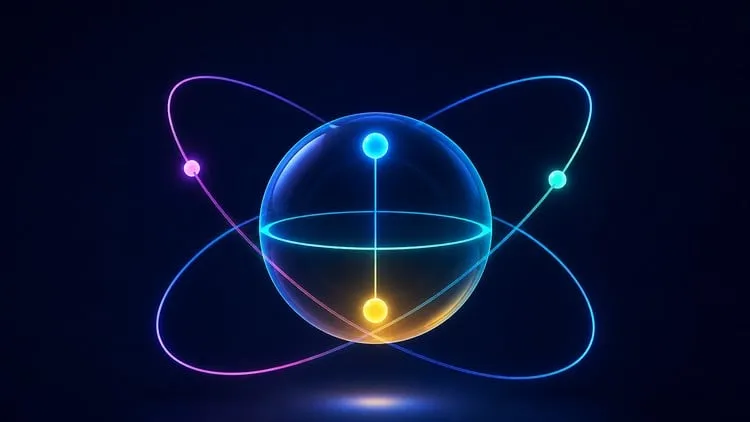
Quantum computing uses principles of quantum mechanics to represent and process information in ways that differ from classical computing.
For beginners, concepts such as superposition, quantum gates and quantum algorithms can initially seem unfamiliar. Understanding these foundations makes it easier to explore how quantum circuits work and why quantum computing has attracted interest across science and technology.
This course introduces essential quantum computing concepts and familiarises learners with key ideas and algorithms in the field. A clear foundation also helps distinguish established principles from current hardware limitations and future possibilities.
Explore what quantum computing is, how it differs from classical computing and why it is an important area of technological research.
Understand the basic idea of a qubit and how quantum states differ from the classical bits used in conventional computers.
Discover how quantum gates represent operations on quantum states and form the building blocks of quantum circuits.
Learn how quantum operations can be arranged into circuits to represent quantum computations.
Explore how quantum algorithms use quantum principles to approach specific computational problems.
Understand the purpose of Shor's algorithm and its significance in factoring integers, including its implications for certain widely used public-key cryptographic systems.
Explore Grover's algorithm and its approach to searching an unstructured collection of possible answers.
If you are new to the subject, start with the foundational concepts and build your understanding gradually. The course is an introduction to the field, not a guarantee of professional qualification or job readiness.
After building a foundation in quantum computing, you may wish to explore related areas such as:
Learn how quantum circuits can be represented and executed using quantum programming tools.
Study how algorithms such as Shor's and Grover's approach particular computational problems.
Explore research at the intersection of quantum computing and machine learning.
Understand why developments in quantum computing matter for cryptography and the transition towards post-quantum cryptographic standards.
Explore Sthitha ExodiaDelivered on Udemy and taught by Rantish Valathe Rajan and Anil Erinchikkadavathu Achoora, as listed on the course page. The course notes that it contains the use of artificial intelligence.
On-demand video across 5 lectures.
Each part includes downloadable slides (PDF) and a quiz.
English captions are provided for every lecture.
Udemy certificate of completion, with lifetime access.
New to the subject? Start here, or get in touch. Prefer to learn in Malayalam? See Quantum Computing in Malayalam.
Research & InnovationThe course is intended as an introduction. Review the published course description for any specific prerequisites.
Programming requirements depend on the lessons and practical activities included. Check the current course curriculum to confirm whether coding experience is required.
Qubits are the basic units of quantum information. Unlike classical bits, which are represented as 0 or 1, qubits can exist in quantum states that exhibit superposition.
Shor's algorithm is known for its approach to integer factorisation, while Grover's algorithm provides a quantum approach to searching an unstructured search space.
Depending on your interests, you can continue into quantum programming, quantum circuits, quantum algorithms, quantum information or quantum machine learning.
Start with the fundamentals, understand the concepts behind quantum circuits and algorithms, and build a foundation for further exploration of quantum technology.